
News
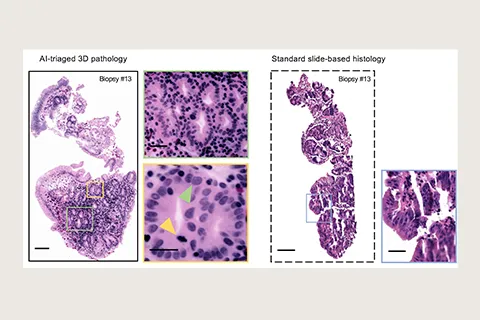
Mon, 08/05/2024
3D pathology and AI for Barrett’s esophagus
A new project aims to improve early cancer detection for people with a digestive condition.

Wed, 07/31/2024 | UW College of Engineering
Engineering by nature
Researchers throughout the UW College of Engineering, including ME Professor Santosh Devasia, are looking to nature for inspiration to create groundbreaking innovations.

Wed, 07/31/2024 | UW News
Understanding women’s sports injuries
ME Assistant Professor Jenny Robinson is interested in designing better methods to help female athletes train to prevent and recover from injuries.
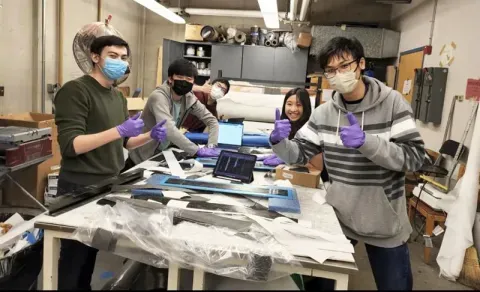
Fri, 07/19/2024 | UW College of Engineering
Students create composite materials
Members of the UW Society for Advancement of Material and Process Engineering, including ME student Ella Ramos-O'Neill, gain hands-on experience designing, building and even breaking materials.
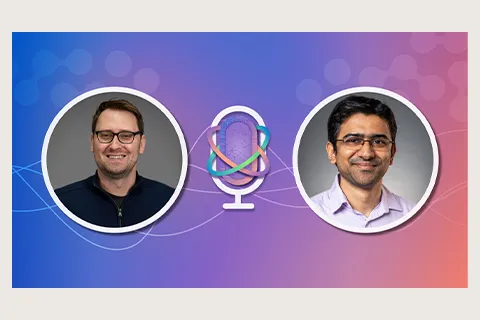
Fri, 07/19/2024 | Microsoft Research Podcast
Sustainable electronics
ME Assistant Professor Aniruddh Vashisth and Microsoft Research discuss the development of printed circuit boards with less environmental impact.

Mon, 07/15/2024 | Popular Science
Testing the waters
In a story about a wave-energy testing site in Scotland, ME Professor Brian Polagye comments on tidal and wave energy technology adoption.
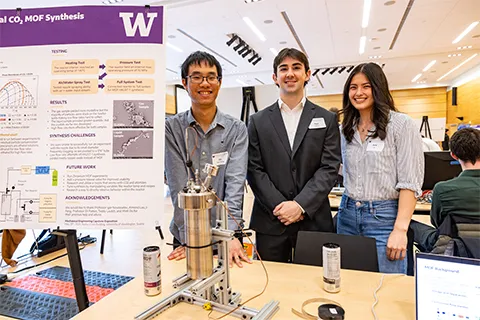
Mon, 07/08/2024
Students showcase skills at ME capstone expo
Capstone projects addressed problems in transportation, renewable energy, health, accessibility and more.
Wed, 07/03/2024 | UW Aeronautics and Astronautics
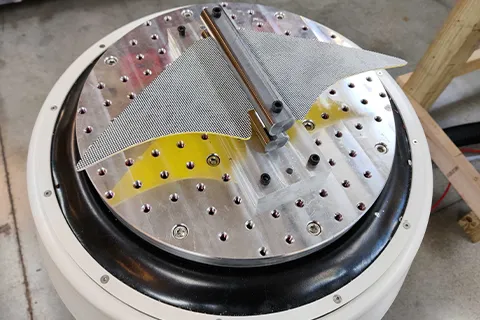
Stingrays could inspire new underwater vehicles
Researchers like ME student John Michael Racy look to stingrays for how to develop efficient, quiet and sustainable underwater vehicles.
Thu, 06/27/2024
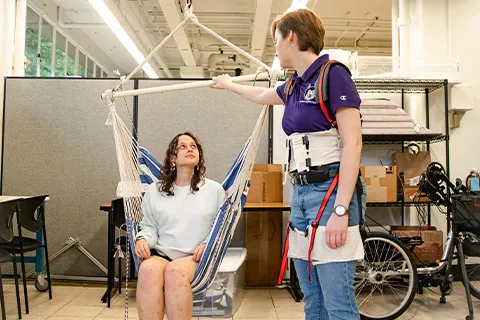
Testing an in-home mobility system
Through innovative capstone projects, ME students worked with community members to design an adaptable mobility system.
Tue, 06/18/2024 | Mass General Brigham
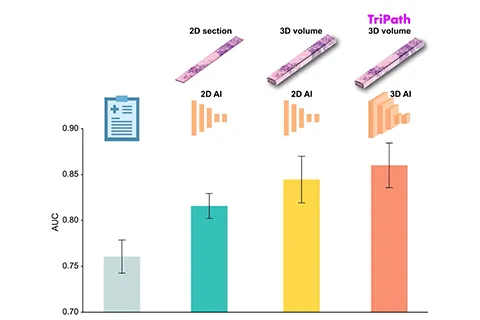
New AI models for 3D pathology
Researchers, including Professor Jonathan Liu, developed deep learning models that use 3D pathology datasets to predict clinical outcomes.