September 14, 2026
Graduate students share their path to receiving NSF support for their research.
Throughout the years, many of our master’s and doctoral students have received funding to further their innovative research. Funding sources include the National Science Foundation Graduate Research Fellowship Program (NSF GRFP), which recognizes and supports outstanding graduate students pursuing STEM degrees who demonstrate the potential to make significant contributions to the field.
The application process involves numerous items, including a personal statement, graduate research plan statement and reference letters. 2026 applications are due October 16-22 for engineering.
Here, two ME graduate students demystify the process of applying for the GRFP and share advice for applicants. Ally Clarke received the GRFP in 2024, and Alex Eagan was among the students who received the GRFP in 2026.
What was your process for writing your personal statement?
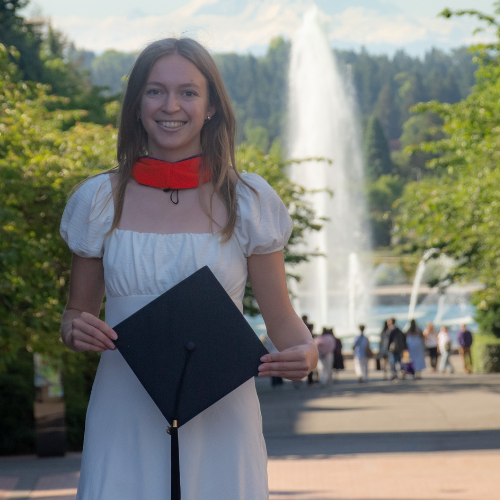
Ally Clarke
Ally Clarke: My personal statement was broken down into three sections: intellectual merit, broader impacts and future goals. In the intellectual merit section I provided technical details about prior research experiences, relevant coursework and awards I’d won. In the broader impacts section I discussed how my research impacts the world and leadership positions I've held, demonstrating my ability to be a future leader in the field. For the future goals section, I described where I wanted to go to graduate school, the category of research I wanted to do (human movement biomechanics) and how the GRFP would support my mission.
Throughout the application process, I was reminded that the goal of the GRFP is to fund the individual, not the research. In some ways, this makes the personal statement more important than the research statement. It's critical that you demonstrate you have the ability to be a leader in your field and you describe how the GRFP will help you accomplish your goals.
Alex Eagan: For the personal statement, craft a story. Even if it is not your nature, attempt to embody someone who isn't humble. I had success asking myself how I would describe my best friend's accomplishments to a potential future manager. Remember to give all the context you can! The reviewers only know what you tell them, so if you leave out difficult circumstances or positive outcomes, you sell yourself short for no reason.
How did you describe your work for the research statement?
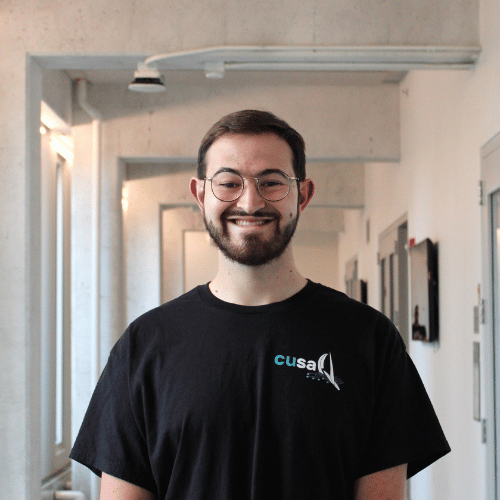
Alex Eagan
Clarke: The research I proposed was focused on the computational modeling of the lumbar spine. In my research proposal, I provided an introduction, two detailed research aims, and a section describing the broader impacts of that work. I was fortunate to have the guidance of advisors at my undergraduate institution to lead me through the application process. I started working on my application in July before its final submission in October. I started with the personal statement, which was helpful as I could use this document to form my personal statements for graduate school applications. Then I worked through the research proposal.
Eagan: For the research statement, make sure to read a lot of the relevant literature. If your coursework or professors expose you to cutting-edge work in adjacent fields, consider writing a proposal that combines your lab’s strengths with promising research in those areas. Aim to get feedback from people in the field of your proposal, as well as from people who are not in the field. Your reviewers are not necessarily working in the area your proposal addresses, so show them the context and motivation needed to find your proposed research timely, exciting and useful.
What other advice do you have for applicants?
Clarke: I was fortunate to have an advisor who had helped multiple students receive GRFP awards and understood what the NSF looks for, and I would definitely recommend finding a knowledgeable advisor to other students. There are also some publicly available examples of old NSF applications. It can be helpful to see how other students structured and formatted their documents, though I recommend getting at least a draft of both the personal statement and research proposal completed before looking at other student examples. My biggest piece of advice for this fellowship — and others — is to start early! This allows for plenty of time for feedback from advisors and allows you to put together the best application possible.
Eagan: If you begin working in a lab during the summer, ask your adviser to appoint you as staff rather than as a student. Even one month enrolled as a student before the academic year begins could classify you as a second-year graduate student, potentially making you ineligible for the GRFP.
Though starting early is recommended, it’s possible to pull together a good application relatively quickly. Embrace your resources and. make extensive use of the example applications online. Aim to get many eyes on your writing. Be respectful of people you ask for feedback by asking them early and working with them to make sure you provide your work at the stage and timeline needed for their schedule.
Give yourself some time — at least 1-2 days — to step away from your application materials, then return to them with fresh eyes. For references, list more than three names even if only three reference letters will be accepted, in case one reference does not submit their letter in time. Don’t hesitate to include strong recommenders you worked with some time ago.
Learn more about graduate fellowship awards for ME students.