
Senior design projects (also known as "capstone" projects) are the centerpiece of the ME curriculum's professional component, allowing students to be involved in interesting, real-world activities.
Each senior is required to complete their project by enrolling in the Capstone Design I & II two-quarter course sequence: ME 494-495. Capstone projects are each advised by a faculty member.
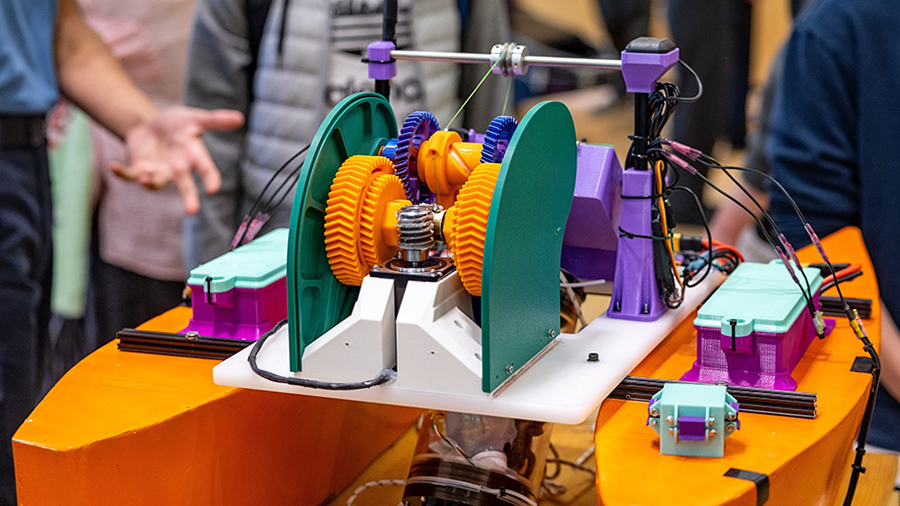
Without exception, all capstone design projects must be team efforts. Teams must consist of between three and five students.
Project topics
Students can pursue their varied technical and professional interests by addressing needs from a wide range of clients and types of projects:
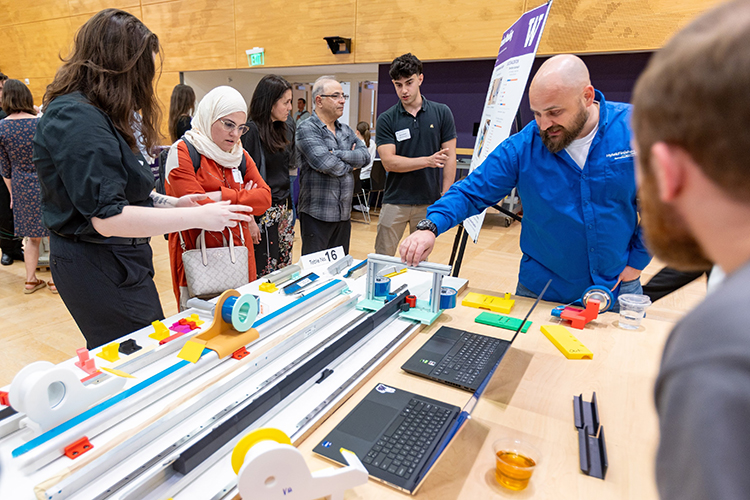
Partner organizations
- Industry sponsors
- Community and non-profit organizations
- Government entities
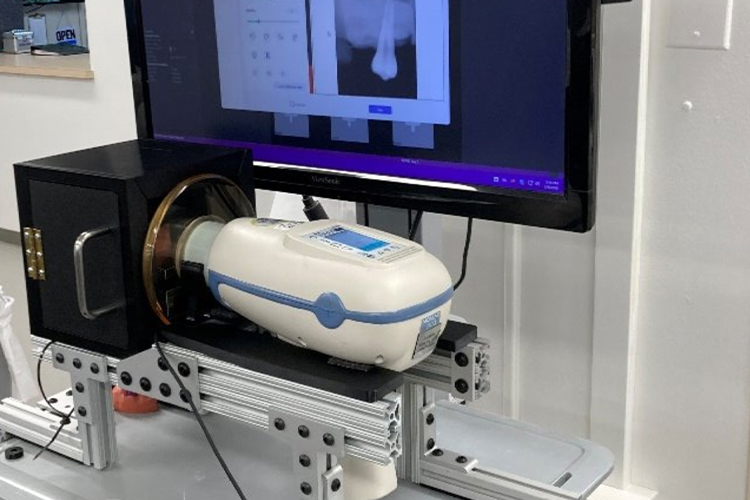
Topical
- Clinical and medical devices
- Marine energy
- Mechatronics
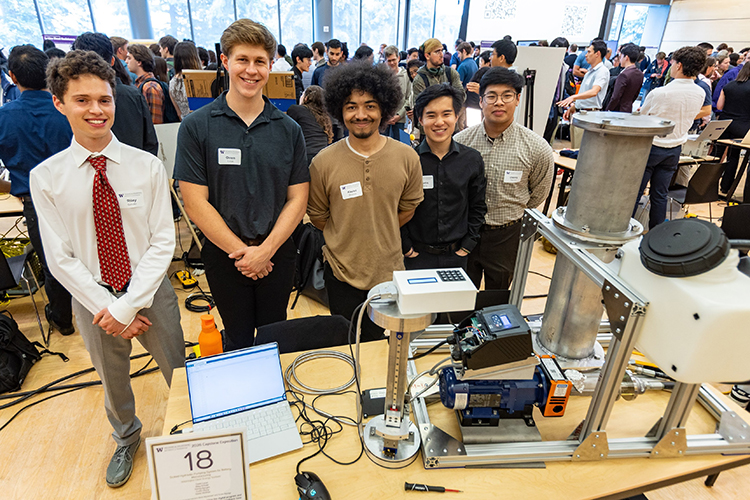
Internal hosts
- Faculty research labs
- Engineering Student Organizations
- Other UW units
- Student proposals
Examples of types of needs that make for great design projects include:
- Redesign for performance: DFX: weight, cost, sustainability
- New mechanism: Robot end-effectors, drone interfaces
- Feasibility or trade-space study: Energy systems, gravity batteries
- Fixtures & jigs to improve process: Ergonomic tool grips and carts
- Custom hardware: Prosthetics, test rigs, enclosures
- Technology demonstrators: New sensors, microbatteries
- Mechatronics: Control systems, robotics
Design process
Capstone design projects allow students to experience the rigor and structure of a full-cycle design, including:
Problem definition
Benchmark studies
Concept generation and feasibility study
Engineering design analyses
Prototype fabrication and testing
Through the capstone courses, students learn to fully define a design problem. This includes not only a statement of the project deliverables and objectives in the layman's or client's terms, but also a full definition of the agreed upon functional requirements and constraints (quantified). In the case of the competition-based projects, the problem definition is based on the detailed rules and guidelines of the competition.
All of the capstone projects draw upon at least several fundamental engineering science areas and involve significant quantitative analysis often in the form of numerical simulation, typically preceded by approximate analytical solutions. Industry-inspired projects are carefully selected on the basis of the required fundamental engineering science areas and also to align with the core expertise of the faculty adviser.
All projects must include a written report. Although the form of the report may vary according to the nature and requirements of the individual project, all final reports must contain the following (or equivalent) sections:
- Risk and liability
- Ethical issues
- Impact on society
- Impact on the environment
- Cost and engineering economics
Capstone expo
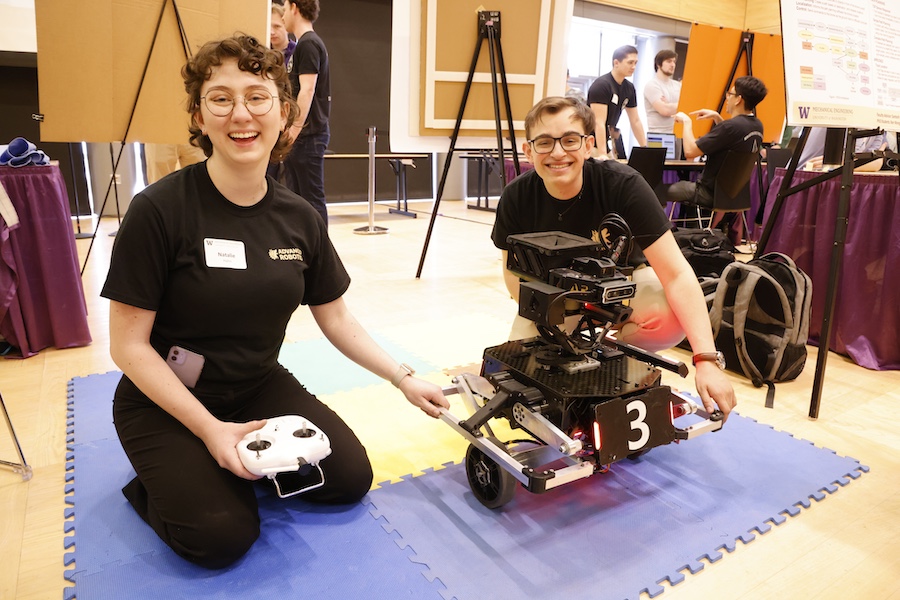
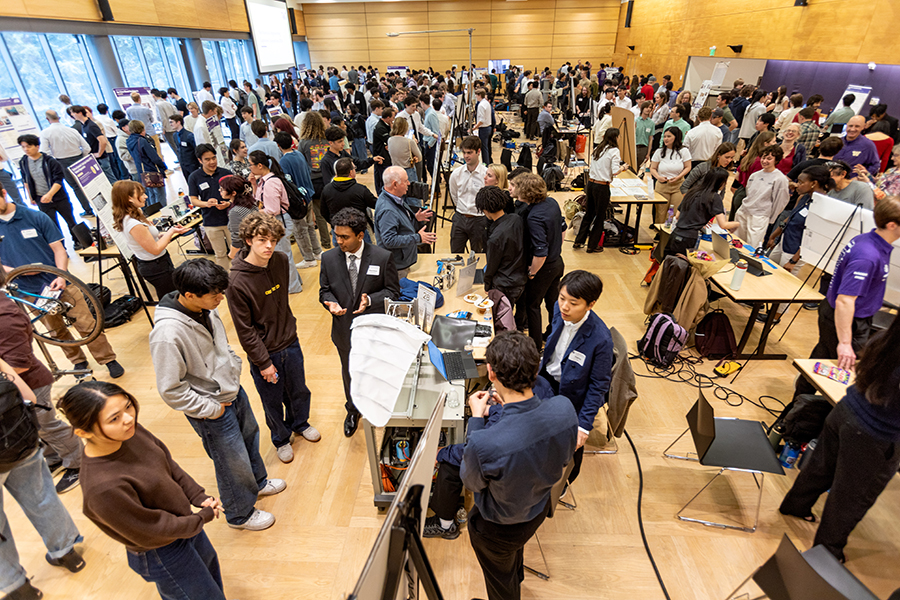
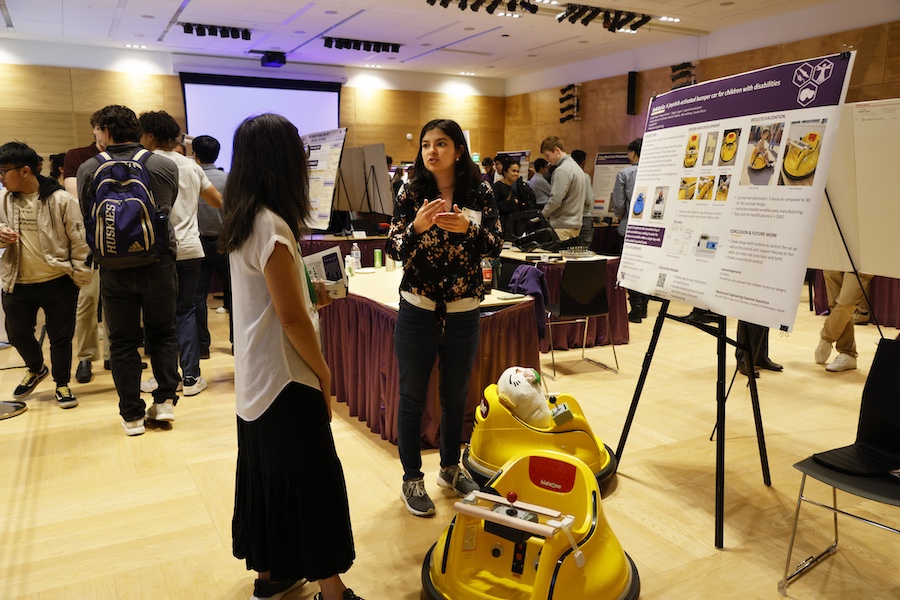
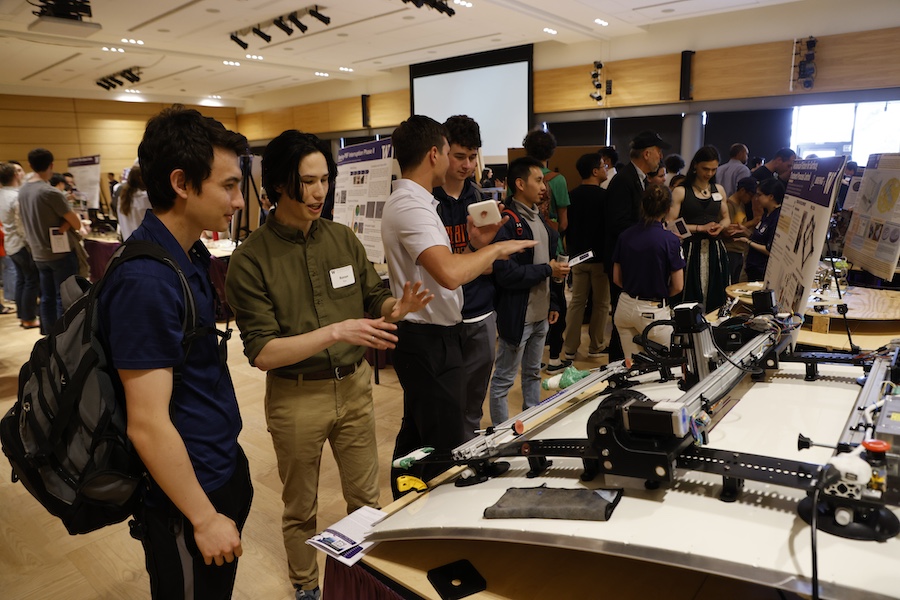
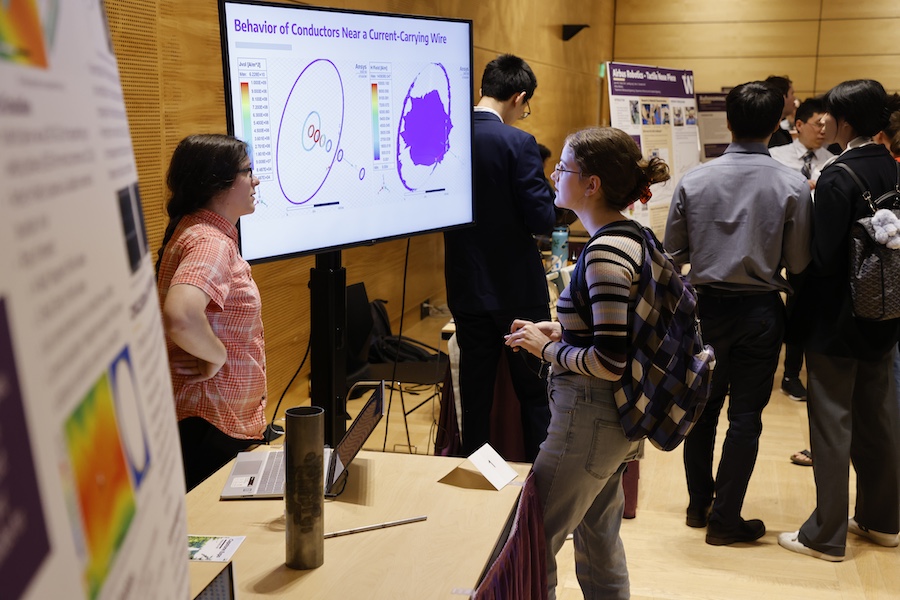
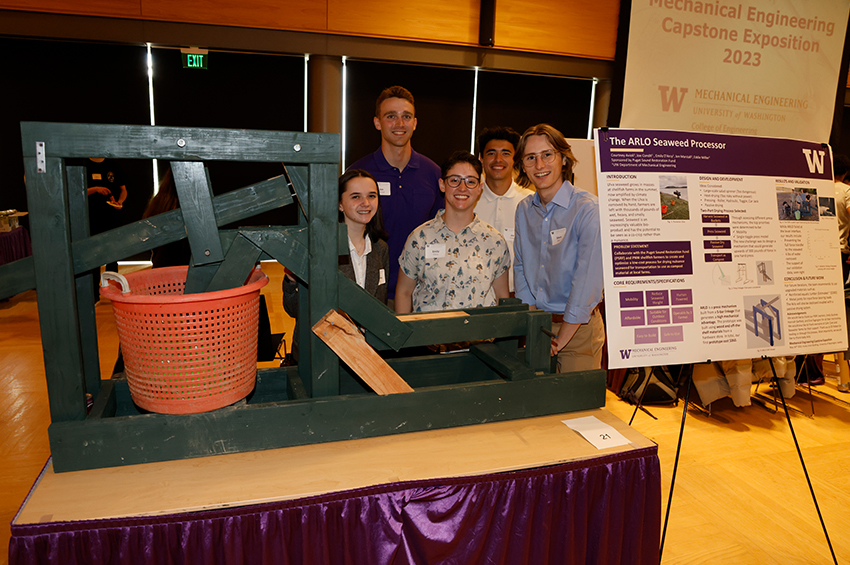
At the end of each academic year, ME undergraduates showcase their capstone design projects through posters, prototypes, exhibits and demos at an annual capstone expo.
Sponsor a project
- For sponsored industry capstone projects, contact Jill Kaatz, CoE Industry Capstone Program Director
- For all other types of projects, contact the Mechanical Engineering Capstone Faculty Co-directors: Eli Patten and Sirine Maalej
Industry Capstone Program
The Industry Capstone Program brings together UW students and professionals to tackle real-world, interdisciplinary engineering problems. Sponsors bring in projects from their organizations and provide support to teams of creative, talented engineering students who will design and build innovative solutions.
View past projects