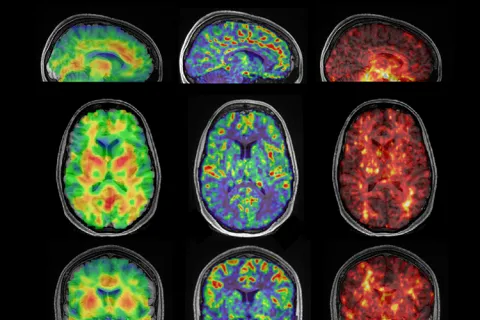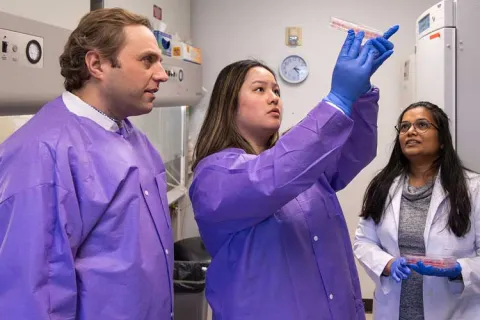
We apply engineering principles to help solve unmet health care needs.
Our department bridges boundaries between engineers and medical professionals by integrating research, student projects, quantitative analysis, clinical practice and commercialization to train leaders in health care innovation. Our labs develop and research innovations — such as medical imaging tools or a way to recharge a pacemaker using heartbeat energy — to improve diagnoses and treatment of injury or disease while reducing costs.
How ME is making an impact
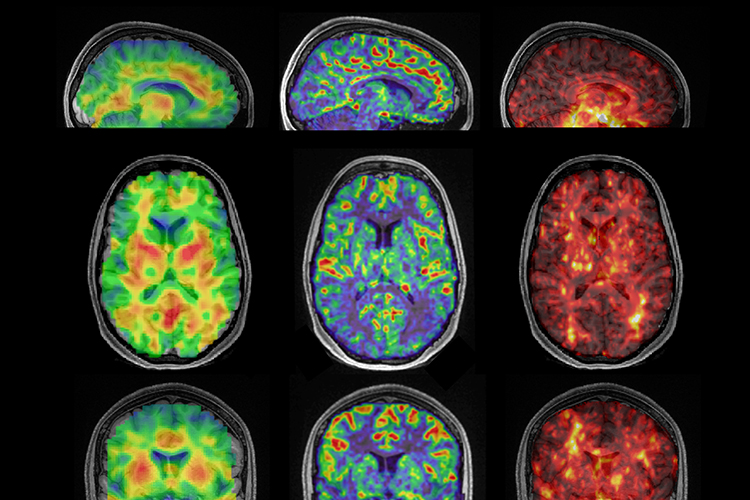
Linking blood flow and brain health
ME researchers, led by Associate Professor Mehmet Kurt, are using imaging methods to learn how blood flow may impact the hippocampus.

UW researcher aims to understand common women’s sports injuries
Assistant Professor Jenny Robinson is interested in designing better methods to help female athletes train to prevent and recover from injuries.

Engineering heart health
Professor Nate Sniadecki approaches the heart from a biomechanical perspective, designing and developing micro- and nano-sized tools that measure the resilience of heart cells.
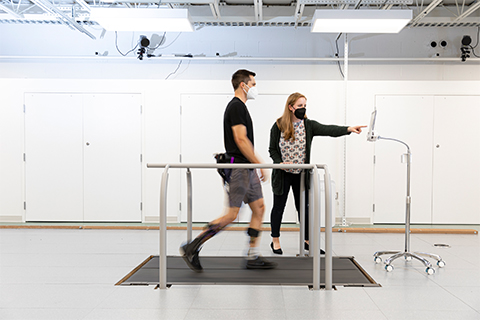
Supporting mobility in cerebral palsy
ME research explored how a robotic exoskeleton device paired with real-time feedback can enhance rehabilitation therapy for children with cerebral palsy.
Research centers and institutes
AI Institute in Dynamic Systems
The AI Institute in Dynamic Systems aims to develop the next generation of advanced machine learning tools for controlling complex physical systems by discovering data-driven models through optimal sensor selection and placement.
Amplifying Human & Robotic Movement & Performance Lab (AMP Lab)
The Amplifying Human & Robotic Movement & Performance Lab (AMP Lab) is a 6000 ft^2 shared laboratory between the College of Engineering and Rehabilitation Medicine that leads clinical trials to advance our understanding of the dynamics and control of movement to design treatment strategies and assistive technologies that improve health and performance.
Center for Limb Loss and MoBility (CLiMB)
Center for Limb Loss and MoBility (CLiMB) partners with the UW and ME department to enable students and faculty to carry out biomechanics research that aims to preserve and enhance the mobility of veterans and others with lower limb musculoskeletal impairment or limb loss.
Center for Research and Education on Accessible Technology and Experiences (CREATE)
The Center for Research and Education on Accessible Technology and Experiences (CREATE) is led by an interdisciplinary team whose mission is to make technology accessible and to make the world accessible through technology.
All research centers & institutesAssociated faculty
Notable partners and sponsors
National Institutes of Health; National Institute on Disability, Independent Living, and Rehabilitation Research (NIDILRR); Seattle VA Medical Center; Seattle Children’s.
Application areas
Advanced manufacturing
Our researchers develop machines that can treat organ failure, develop technologies to treat kidney stones and more.
Biomedical science and technology
ME works to improve the quality and efficiency of medical care through developing devices and biomaterials, studying cell and tissue mechanics, investigating the mechanics of brain injury and its impacts on mobility, and more.
Robotics
Amplifying human and robotic interactions, ME researchers explore how assistive technologies can support mobility.
Environment
Our faculty and students study how to make the built environment more accessible for people with disabilities.