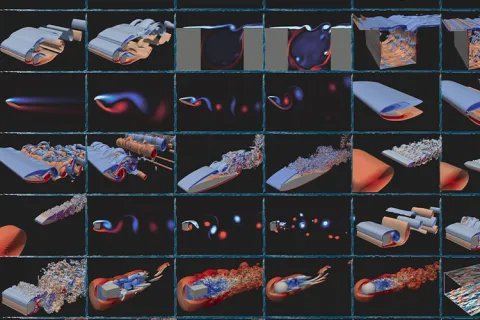
From medical devices to renewable energy, a strong understanding of fluid and thermal mechanics underlies many of the emerging technologies that address society’s most pressing challenges.
Understanding how liquids and gases transport momentum and energy is central to various industries, including transportation, advanced manufacturing, robotics, energy and health care. ME fluids researchers provide fundamental insights on a broad range of topics, such as acoustics, heat transfer, cardiovascular flows, aerodynamics, complex dynamical systems and multi-phase flows. Our location in Seattle offers researchers distinct advantages, from nearby marine environments to industry partnerships and collaborations with UW Medicine.
How ME is making an impact
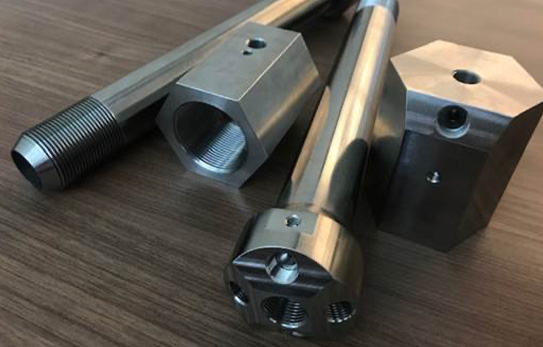
UW researchers develop a reactor that can destroy ‘forever chemicals’
UW researchers created a reactor that can completely break down hard-to-destroy chemicals using “supercritical water,” which is formed at high temperature and pressure.
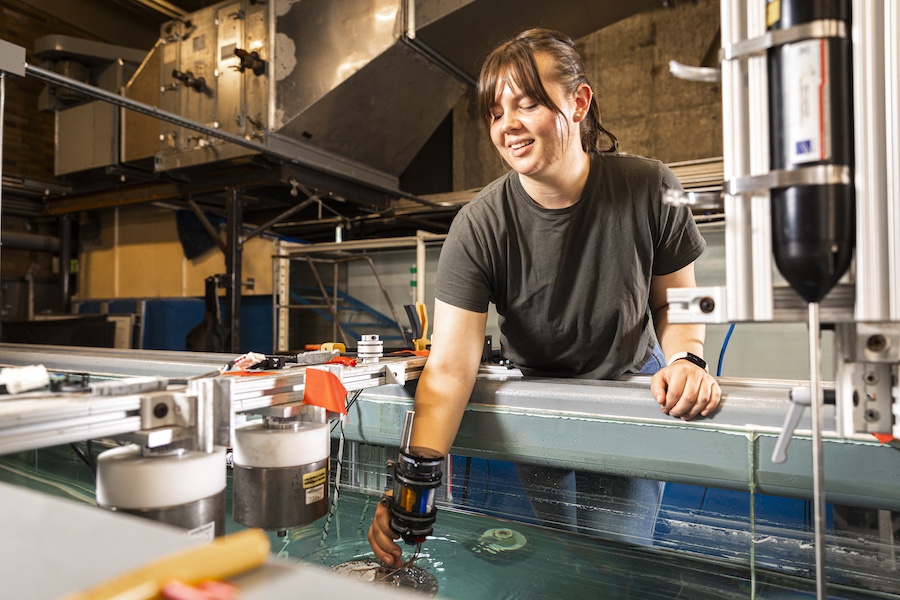
Monitoring for marine life
To help ensure the safety of renewable energy technologies, ME and Pacific Northwest National Laboratory researchers are testing methods to assess the potential impacts of tidal turbines on marine mammals.
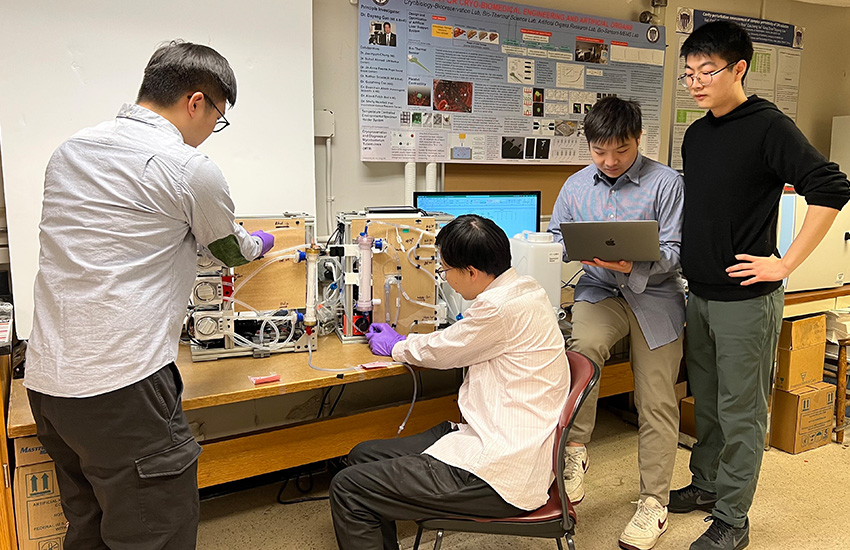
A healthy collaboration
ME and UW Medicine worked together to develop the Artificial Multi-Organ Replacement system, a machine that treats organ failure by removing toxins in patients’ blood. It also pumps fluids back into the bloodstream.
Improving cancer diagnoses
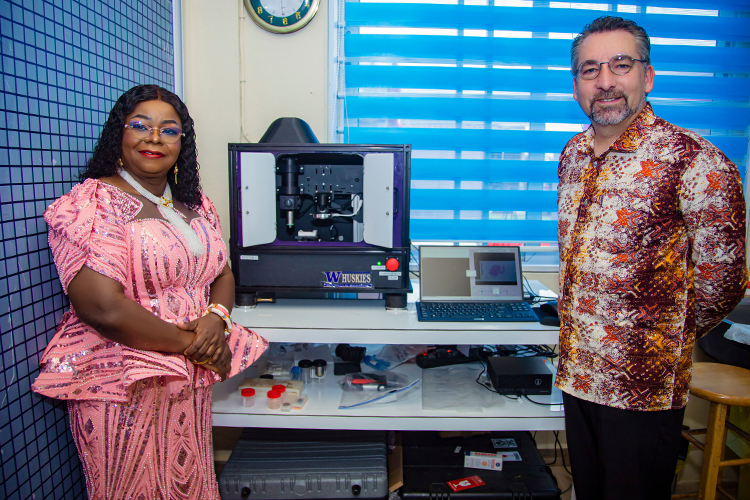
A medical device provides rapid imaging of biopsies to improve breast cancer diagnoses.
Research centers and institutes
AI Institute in Dynamic Systems
The AI Institute in Dynamic Systems is transforming research and education in fundamental artificial intelligence and machine learning theory, algorithms, and applications specifically for safe and certifiable real-time learning and control of complex dynamic systems.
Institute for Stem Cell and Regenerative Medicine
The Institute for Stem Cell and Regenerative Medicine is made up of collaborative researchers working to study and stop diseases impacting nearly every organ and system in the human body.
Molecular Engineering & Sciences Institute
The Molecular Engineering & Sciences Institute brings together engineers and scientists from across the University of Washington to develop molecular-based solutions for urgent societal problems and to educate the next generation of interdisciplinary researchers and innovators.
Pacific Marine Energy Center
The Pacific Marine Energy Center is a consortium of researchers from three universities working with collaborators to address key challenges in the marine energy sector and accelerate its emergence.
All research centers & institutesAssociated faculty
Notable partners and sponsors
Boeing, Microsoft, Amazon, TerraPower, Pacific Northwest National Laboratory, National Laboratories, NASA Glenn Research Center, DEVCOM Army Research Laboratory, the U.S. Army Corps of Engineers Engineer Research and Development Center.
Application areas
Advanced manufacturing
Fluid and thermal mechanics are key to manufacturing vehicles, optimizing engines and cooling down heat-generating electronics, as well as optimizing engines. Fluids also inform the fabrication of advanced materials, how materials behave in 3D printing and more.
Biomedical science and technology
ME researchers create microfluidic devices and study how fluids and molecules move inside the body to improve human health through drug delivery, disease diagnoses and treatment, and more.
Energy
Knowledge of how fluid movements lead to energy conversion help researchers work to improve renewable energy and other energy systems.
Environment
How fluids move in the environment impact how ME researchers study marine energy, transportation, air pollution and more.